
I Unmasked in Front of the Wrong Person, and Here’s How It Affected Me
Written By Taleya Jordan
As a neurodivergent person, masking is often my first language.
Masking is the careful calibration of my personality. It’s the constant monitoring of my tone, my facial expressions, my questions, my reactions.
It’s laughing when everyone else laughs, even if I don’t fully understand the joke. It’s holding back questions because I don’t want to seem intrusive. It’s softening my honesty so it doesn’t come across as harsh. It’s shrinking parts of myself to make other people comfortable.
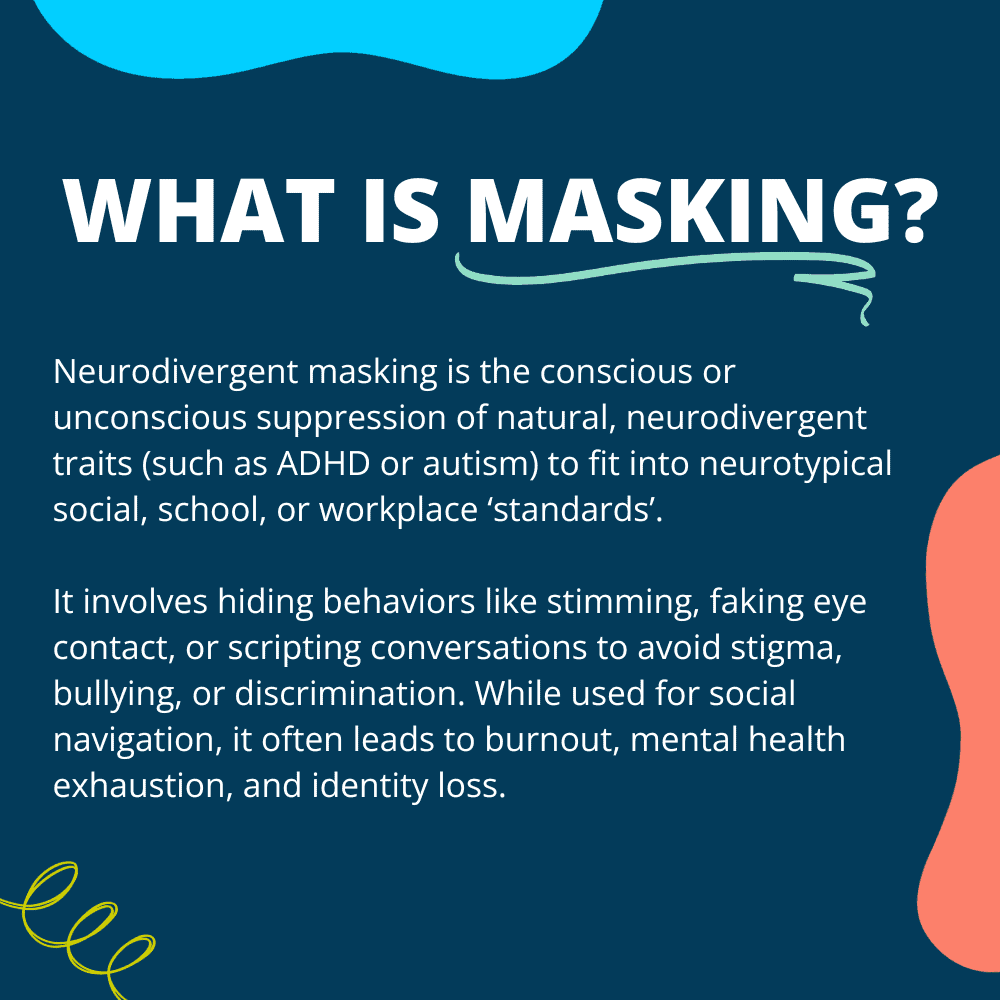
And unmasking? Unmasking is the opposite. It’s when I let those protective layers fall away. It’s when I stop performing and start existing. But unmasking requires trust. And trust, for me, does not come easily.
When you are neurodivergent, deciding whether it’s safe to unmask around someone can feel impossible. There isn’t a clear signal. There isn’t a checklist. Sometimes you’ve known someone for years and still don’t know. Sometimes they make you feel safe, accepted, and seen—until suddenly, they don’t.
I unmasked in front of someone I trusted deeply. Someone I had grown close to over the course of years. Someone who made me feel, for a moment, like I didn’t have to edit myself. So I stopped editing. I let them see who I really was.
At my core, I am curious. I love learning about people—their stories, their perspectives, the way they see the world. I ask questions because I care, because I want to understand, because connection fascinates me. I am also deeply honest and direct. Honesty has always been important to me. Growing up around dishonesty and manipulation, I made a promise to myself that I would never live that way. I never wanted to be someone who hid behind falsehoods just to be accepted. And I am sensitive. Compassionate. Sappy, even. I feel things deeply. I care deeply. I love deeply. That is who I am when I unmask. But when I showed that version of myself to this person, something shifted.
My curiosity, which had once been welcomed, was now interpreted as accusation. My honesty was reframed as entitlement. My openness was seen as attention-seeking. My authenticity became something to criticize instead of something to cherish. I was no longer understood. I was misrepresented. And eventually, I was rejected.
There is a specific kind of pain that comes from being rejected not for who people think you are—but for who you actually are. It made me question everything. Was I too much? Too intense? Too honest? Too sensitive?
I replayed conversations in my head over and over again, trying to find the exact moment where I went wrong. I gaslit myself into believing that every misunderstanding was my fault. That if I had just masked better, stayed smaller, stayed quieter, stayed safer, maybe I wouldn’t have lost them.
And for a while, I regretted unmasking at all.
Because masking protects you. Masking keeps you safe from rejection. Masking gives people a version of you that is easier to accept.
But masking also keeps you from being truly known.
What made this experience even more confusing was realizing that the exact same traits that one person rejected were the same traits others had loved.
Some people see my curiosity as inspiring. Others see it as invasive. Some people see my honesty as refreshing. Others see it as rude. Some people see my sociability as warmth. Others see it as attention-seeking. The same person. The same behaviors. Completely different interpretations. And that’s when I began to understand something important: there is a difference between intention and interpretation. My intention has always been to connect, to understand, to be authentic. But interpretation is shaped by someone else’s experiences. Their past. Their insecurities. Their expectations. Their conditioning. I cannot control how someone interprets me. And more importantly, I cannot abandon myself trying to control it.
This realization didn’t erase the pain. Rejection still hurts. Being misunderstood still hurts. Losing someone still hurts. But it helped me release some of the shame. Because unmasking was not a mistake. Unmasking was an act of trust. Unmasking was an act of courage. Unmasking was me choosing authenticity over performance. And even though it cost me that relationship, it gave me something else: clarity. It showed me who was truly safe for me and who wasn’t. It reminded me that the right people will not punish you for being yourself.
They will not twist your curiosity into accusation. They will not turn your honesty into a flaw. They will not make you feel like authenticity is something to apologize for. They will see you. And they will stay. I am still learning how to live with the vulnerability that comes with unmasking. I still catch myself shrinking sometimes. I still hesitate. I still feel fear.
But I also know this: I would rather be rejected for who I truly am than accepted for who I pretend to be. Because masking may protect you from rejection—but it also protects you from connection. And connection is worth the risk.

If you are neurodivergent and you have ever unmasked in front of the wrong person, I want you to know this:
There is nothing wrong with you. You did not fail. You were brave. You chose authenticity in a world that often rewards performance. And one day, you will find people who see your unmasked self not as “too much,” but as exactly enough.
Being neurodivergent can sometimes feel like you’re constantly editing yourself to fit into spaces that weren’t built for you. But there are communities where you don’t have to shrink, soften, or second-guess who you are.
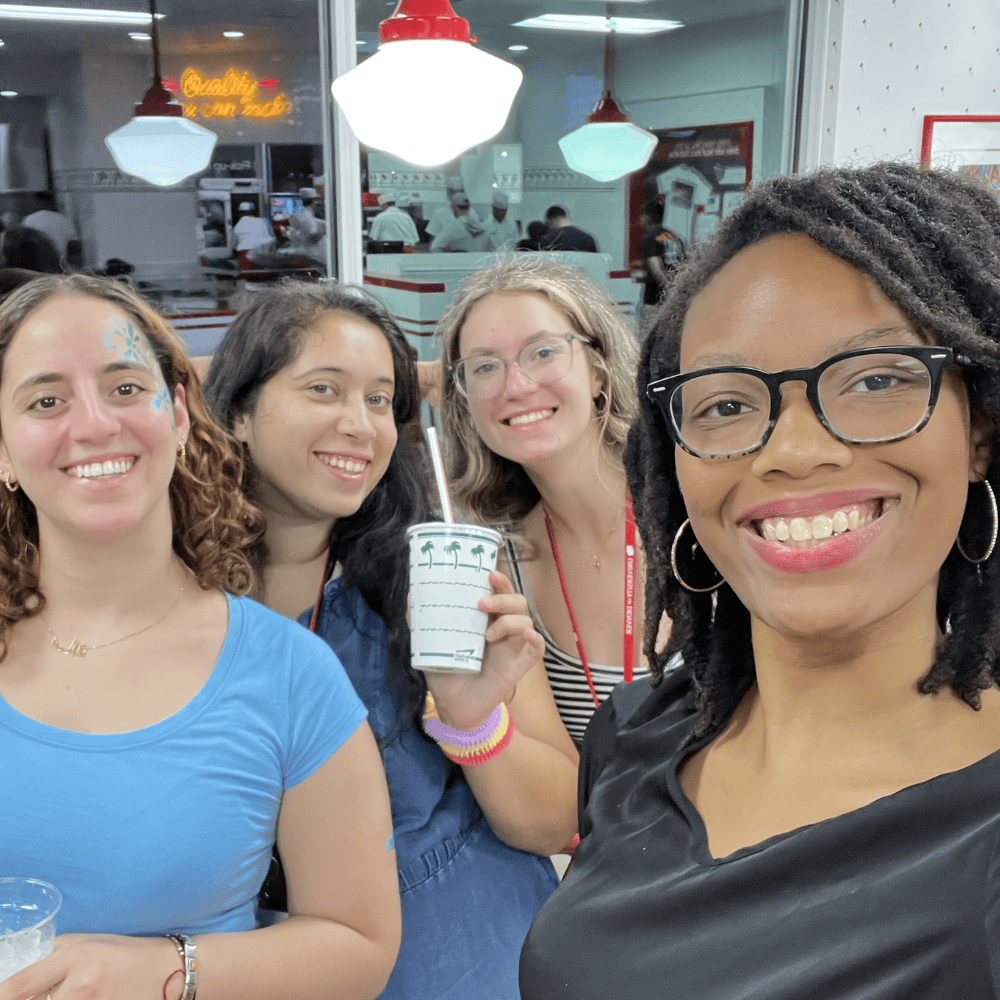
Here at The Neurodiversity Alliance, neurodivergent students and young adults connect with people who get it. Through mentorship, leadership programs, paid internships, and a national student community, you can build confidence and meet people who value your authentic self.
If you’re a neurodivergent student or young adult, there’s a place for you here.
Explore opportunities and get involved with The ND Alliance - because the right community won’t ask you to mask. It’ll celebrate who you already are.